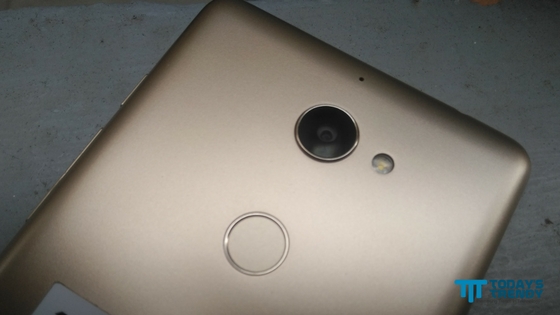
Oppo has launched their first smartphone in 2018 for the Indian market, the Oppo A83, at an event held in Bangalore, India. The same phone was launched earlier last month in China, but with 4 GB of RAM.

Oppo A83 front
Oppo A83 (Credit: Manish Choudary/Today's Trendy)

Oppo A83 comes with a 5.7-inch display with a resolution of 1440x720 pixels and an aspect ratio of 18:9 which is a must-have for every smartphone from now, a feature rarely seen in the products of this price range. It comes packed with a MediaTek Helio P23 octa-core 2.5 GHz processor.

Oppo A83 rear
Oppo A83 (Credit: Manish Choudary/Today's Trendy)

As far as the cameras are concerned, the device comes with a 13-megapixel rear camera and an 8-megapixel front camera with AI Beauty Technology especially installed for better selfies, or 'Smart Selfies' as the company likes to call it.

Oppo A83 side
Oppo A83 (Credit: Manish Choudary/Today's Trendy)
The smartphone runs on 3,180 mAh battery and features 3 GB RAM along with 32 GB internal storage which is expandable up to 256 GB via microSD card. It weighs about 143 grams.

Oppo A83 bottom
Oppo A83 (Credit: Manish Choudary/Today's Trendy)

Oppo A83 runs on ColorOS 3.2 based on Android 7.1 Nougat. It is a dual nano SIM smartphone. It comes with facial unlock feature, and the fingerprint sensor is no longer available.

Oppo A83 camera modes
Oppo A83 camera modes (Credit: Manish Choudary/Today's Trendy)

The device comes in two color options, viz. black and gold. It will be available on sale in India in both online (Amazon and Flipkart) and offline stores from the 20th of January for ₹13,990 ($220 approx.).

Oppo A83 specifications


Operating System: Android 7.1 (Nougat)
Processor: MediaTek Helio P23
Memory: 3 GB RAM
Storage: 32 GB internal (expandable up to 256 GB)
Display: 5.7-inch HD+
Resolution (pixels): 1440x720
Primary camera: 13 megapixel
Secondary camera: 8 megapixel
Battery: 3,180 mAh
Dimensions (WidthxHeightxDepth): 73.1x150.5x7.7 mm
Weight: 143 g
Price: ₹13,990
Razer, the company that made news last year for their gaming-centric smartphone, gave goosebumps to Microsoft when they showcased Project Linda at the ongoing Consumer Electronics Show in Las Vegas. It is a laptop concept wherein their flagship smartphone provides the brains and the control system and also serves as the trackpad.

Project Linda efficiently uses the Razer Phone
Project Linda efficiently uses the Razer Phone (Credit: Razer)


The idea behind Project Linda


The Razer Phone plugs into space where the trackpad traditionally goes. The idea behind Project Linda is to use the phone's processing power and provide the experience of a laptop.

Project Linda specifications


The chassis of the laptop provides the display, a keyboard, a bigger battery, and extra storage space. The keys are backlit, and color coding is used to categorize similar keys together.

Razer Phone's screen can be used a s a secondary display if need be
Razer Phone's screen can be used a s a secondary display if need be (Credit: Razer)

The display is 13.3-inch Quad HD, with a resolution of 2560x1440 pixels. It mirrors whatever is shown on the phone's screen. For apps that need a second display, the Razer Phone's smaller screen is put to use.

Razer Phone plugs into space where the trackpad traditionally goes
Razer Phone plugs into space where the trackpad traditionally goes (Credit: Razer)

There is a USB Type-A port, and a USB Type-C port. There is also a 3.5 mm headphone jack, a 720p webcam, and a microphone.

Project Linda is in the prototype phase, so there is no guarantee if or when it will be available for sale. We do hope it sees the light of the day soon.

Watch the promo video.

When it comes to innovating displays, LG is the name that comes to mind. During Consumer Electronics Show held in 2014, they came up with the world's first flexible OLED TV screens, whose angle of curvature could be controlled via a remote. As intriguing as that sounds, it was a miss amongst the consumers. This year, LG is back at the CES, with yet another innovative display: a rollable OLED screen that can be moved or hidden when not in use.

LG showcases 65-inch rollable OLED TV at CES
LG showcases 65-inch rollable OLED TV at CES (Credit: LG)

Sony had tried such a thing in 2010. Even LG had showcased an 18-inch prototype rollable display at CES last year. But this is the biggest (65-inch) this world has seen. It comes with 4K support. It can be rolled up like a poster into a box, thus making it easily portable.

The screen can be partially unrolled to form smaller displays
The screen can be partially unrolled to form smaller displays (Credit: LG)

If 65-inch is too big for you, or if you intend to use it for purposes other than watching TV, the screen can be partially unrolled to form smaller displays. It can then be used as a calendar or a music player. Moreover, it can be resized to different aspect ratios.

There are no details regarding the availability or pricing. It seems one has to wait to roll up their TVs and go for a walk in the park.
Remember GoPro Karma - the only drone from the action camera giant? It was released in September 2016. However, after the reports of few units free-falling from the sky due to a power failure, it was recalled. The folding drone was re-released early last year after the bug fix.

GoPro will not make any more drones
GoPro will not make any more drones (Credit: JeShoots/Pexels)

Having gone through such a bumpy ride itself, the GoPro Karma is now being grounded permanently. The company has announced that it will exit the drone market after selling their remaining stockpile.

Why?


In a report released by the company, there are two main reasons behind this significant decision. Firstly, the fierce competition is something which GoPro is finding tough to handle. Secondly, the regulatory authorities in Europe and the United States are advocating for strict rules.

"Although Karma reached the #2 market position in its price band in 2017, the product faces margin challenges in an extremely competitive aerial market. Furthermore, a hostile regulatory environment in Europe and the United States will likely reduce the total addressable market in the years ahead. These factors make the aerial market untenable and GoPro will exit the market after selling its remaining Karma inventory".

How does it affect the existing customers?


If you are already an owner of the Karma or are willing to buy one in the stock-clearance sale, you should be good to go since GoPro will continue to provide service and support.

Source: GoPro
Nvidia has unveiled its first Big Format Gaming Display (BFGD) at the ongoing Consumer Electronics Show in Las Vegas. The screen is a whopping 65-inch in size. It also comes with built-in Android TV. For the uninitiated, BFGDs are targeted towards gamers for an intense gameplay experience.

Nvidia's 65-inch Big Format Gaming Display unveiled at CES 2018
Nvidia's 65-inch Big Format Gaming Display unveiled at CES 2018 (Credit: Nvidia)

Nvidia BFGD specifications and technologies


Nvidia has partnered with companies like Acer, Asus, and HP to manufacture the displays. The collective work on the same is going on for over two years now. The screens will boast of 120 Hz refresh rate, 4K resolution, HDR support, and low latency rates – ideal for gamers.

The displays are Nvidia Shield devices as well, which means that the Shield components are embedded in the screen, thus providing all the features of an Android TV, including a bunch of streaming apps like Netflix and Spotify, along with the complete range of Android-based games, and Google Assistant. The GameStream technology of the Shield series will wirelessly stream games via a GeForce card from a PC connected to the local network, i.e., a game running on a high-end computer in the living room can be wirelessly streamed onto the BFGD display in your bedroom.

Asus ROG Swift PG65


Asus has displayed their efforts at the event in the form of ROG Swift PG65. It comes with a peak brightness of 1,000 nits, along with a wide 178-degree viewing angle, dynamic contrast control, and high-end DCI-P3 color gamut support. The ROG Swift PG65 also supports Nvidia G-Sync technology, which reduces latency and efficiently removes stutters occurring at 4K 120 fps frame rate with the help of a compatible Nvidia graphics card.

Asus ROG Swift PG65 is expected to hit the markets sometime in 2018. Other manufacturers may follow suit. More details about availability and pricing will emerge as and when the OEMs are closer to production. There is less doubt about them being premium displays with hefty price tags though.

Check out the promo video.

We've already shared our first impressions of the 10.or G. In this post, we are sharing the benchmark scores.

10.or G

Concerning specifications, the 10.or G features a 5.5-inch full HD screen with a resolution of 1920x1080 pixels. The smartphone is powered by Qualcomm Snapdragon 626 octa-core processor. There are two variants of the device based on the RAM and storage, one with 3 gigs RAM and 32 GB internal memory, and the other with 4 and 64 GB combination. The storage is expandable up to 128 GB. It runs on Android Nougat 7.1.2 and packs 4,000 mAh battery. The smartphone features a dual camera lens setup (13 MP each) at the rear, and a 16 MP selfie camera.

10.or G benchmarks


AnTuTu Benchmark v6.2.7: 66,076
Geekbench v4.2.0 Single-Core: 931
Geekbench v4.2.0 Multi-Core: 4,447
Nenamark3: 1-2
Basemark X v1.1 (medium quality): 20,984
Basemark X v1.1 (high quality): 10,395
Basemark OS II: 1,315
GFXBench OpenGL v4.0.13 Car Chase: 3.8 fps
GFXBench OpenGL v4.0.13 1080p Car Chase Offscreen: 3.5 fps
GFXBench OpenGL v4.0.13 Manhattan 3.1: 6.9 fps
GFXBench OpenGL v4.0.13 1080p Manhattan 3.1 Offscreen: 6.4 fps
GFXBench OpenGL v4.0.13 T-Rex: 21.0 fps
GFXBench OpenGL v4.0.13 1080p T-Rex Offscreen: 23.0 fps
Vellamo v3.2.6 Metal: 1,487
Vellamo v3.2.6 Multicore: 2,370
3DMark Ice Storm Unlimited: 13,939
3DMark Ice Storm Extreme: 8,354
3DMark Sling Shot: 845
3DMark Sling Shot Extreme: 467
PCMark Work Performance 2.0: 4,992

10.or G specifications


Operating System: Android 7.1 (Nougat)
Processor: Qualcomm Snapdragon 626
Memory: 3/4 GB RAM
Storage: 32/64 GB internal (expandable up to 128 GB)
Display: 5.5-inch full HD
Resolution (pixels): 1920x1080
Primary camera: 13+13 megapixel
Secondary camera: 16 megapixel
Battery: 4,000 mAh
Dimensions (WidthxHeightxDepth): 76.0x155.0x9.0 mm
Weight: 168 g
Price: ₹10,999 ($170 approx.) for 3/32 GB variant; ₹12,999 ($205 approx.) for 4/64 GB model
Samsung has announced the very first smartphones from its 2018 portfolio, the Samsung Galaxy A8, and the Samsung Galaxy A8+. The new mid-range phones come with near flagship-like specifications, including the bezel-less Infinity Display and dual front cameras.

Samsung Galaxy A8 and Galaxy A8+

Samsung Galaxy A8 comes with 4 GB RAM and inbuilt storage variants with 32/64 gigs. 3,000 mAh battery powers the device. It sports a 5.6-inch Super AMOLED screen, with a resolution of 2220x1080 pixels.

Samsung Galaxy A8+ is 5 mm wider, and 10 mm taller in comparison, and thus features a more prominent 6-inch display. To power the bigger screen, the battery is bumped to 3,500 mAh. Along with the standard 4 GB RAM and 32/64 gigs memory variants, there is also an option to opt for 6 GB RAM.

Photography is given a higher focus in the new A series. The devices come with a 16 MP primary camera with a f/1.7 aperture. The secondary cameras are a composition of one 8 MP lens and another 16 MP lens, allowing to click selfies with bokeh effect. The Live Focus feature allows adjusting the bokeh effect after the shot is taken. Software-based digital image stabilization technology is now applicable to videos as well.

Samsung Galaxy A8 and A8+ are due to launch in January next year. They will come in four color variants, viz. black, blue, gold, and grey. Pricing is yet to be revealed.


Samsung Galaxy A8 specifications


Operating System: Android 7.1 (Nougat)
Processor: 2x2.2 GHz + 6x1.6 GHz octa-core
Memory: 4 GB RAM
Storage: 32/64 GB internal (expandable up to 256 GB)
Display: 5.6-inch FHD+ Super AMOLED
Resolution (pixels): 2220x1080
Primary camera: 16 megapixel
Secondary camera: 16+8 megapixel
Battery: 3,000 mAh
Dimensions (WidthxHeightxDepth): 70.6x149.2x8.4 mm
Weight: 172 g
Price: TBA

Samsung Galaxy A8+ specifications


Operating System: Android 7.1 (Nougat)
Processor: 2x2.2 GHz + 6x1.6 GHz octa-core
Memory: 4/6 GB RAM
Storage: 32/64 GB internal (expandable up to 256 GB)
Display: 6-inch FHD+ Super AMOLED
Resolution (pixels): 2220x1080
Primary camera: 16 megapixel
Secondary camera: 16+8 megapixel
Battery: 3,500 mAh
Dimensions (WidthxHeightxDepth): 75.7x159.9x8.3 mm
Weight: 191 g
Price: TBA
10.or G was launched in India around couple of months back. It was preceded by an entry-level device, the 10.or E. For the uninitiated, 10.or is a new online-only smartphone brand entering the market exclusively via Amazon.

10.or G front

The smartphone comes in black and grey color variants (we have the former one). Concerning specifications, the device features a full HD display and is powered by Qualcomm Snapdragon 626 octa-core processor. It comes with a 5.5-inch screen. There are two variants of the device based on the RAM and storage, one with 3 GB RAM and 32 GB internal memory, and the other with 4 and 64 gigs combination. We have the higher variant with us. The storage is expandable up to 128 GB via the microSD card slot. The device runs on Android Nougat 7.1.2 and packs a 4,000 mAh battery.

The smartphone features a display with a resolution of 1920x1080 pixels. The three standard buttons for Menu, Home, and Back are placed on the screen (same as the E) resulting in the wastage of a lot of space at the bottom bezel. Additionally, there is a 16 MP front-facing camera lens located above the display, to the right of the earpiece grille, which is itself in the center. The LED flash is located to the left of the earpiece. The notification indicator LED, and the ambient light sensor is placed at the right of the sensor.

10.or G rear

10.or G primary cameras

The smartphone's hardware includes Qualcomm Snapdragon 626 octa-core (8x2.2 GHz) processor and dual 13 MP rear cameras with dual tone LED flash located beside the camera lens'. Above the camera lens lies the secondary noise-cancellation microphone. Below the camera is the circular fingerprint sensor, which delivers more misses than hits. Below the fingerprint module is the 10.or branding. The top antenna line is placed in between the microphone and the cameras, and the bottom antenna line is below the branding.

10.or G left and right

The right side of the device features the power key (located on the top) and the volume rocker key (located below it). The hybrid SIM tray is found on the left side of the device. One of the two nano SIM slots is hybrid; only one slot supports 4G LTE at any instance in time.

10.or G bottom and top

The 3.5 mm headset jack is on the top left. The micro USB port is at the bottom center. The speaker grille and the primary microphone are placed on either side. The right grille houses the speaker, while the left one is a decoy for the microphone. The other speaker is located on the top of the phone without any grille.

10.or G features a metal unibody design, i.e., the rear panel is non-removable. The device has rounded corner, while the display is pointed.

Stay tuned for a detailed review of the device. Subscribe to our feed, like us on Facebook, follow us on Twitter or Google+ to get notified as soon as the review is published.

10.or G specifications


Operating System: Android 7.1 (Nougat)
Processor: Qualcomm Snapdragon 626
Memory: 3/4 GB RAM
Storage: 32/64 GB internal (expandable up to 128 GB)
Display: 5.5-inch full HD
Resolution (pixels): 1920x1080
Primary camera: 13+13 megapixel
Secondary camera: 16 megapixel
Battery: 4,000 mAh
Dimensions (WidthxHeightxDepth): 76.0x155.0x9.0 mm
Weight: 168 g
Price: ₹10,999 ($170 approx.) for 3/32 GB variant; ₹12,999 ($205 approx.) for 4/64 GB model
Remember Thought Factory by Axis? Yes, it was their innovation lab for startups limited to the FinTech domain. For others, they now have Axis Start-up Social.


As the name suggests, the new platform is for networking and socializing, thus sharing knowledge and helping other potential startups. It went live on December 15, at an event held at WeWork, a co-working space in Bengaluru.

We at Today's Trendy were invited to attend the launch event, which unfolded pleasantly that Friday evening. The founders of Licious and Divrt were there to share their success stories, along with the struggles they had to face, both generally and specifically.

First on the podium was Vivek Gupta, the CEO of Licious. It is a meat delivery service currently operating in Bengaluru, Hyderabad and Delhi NCR. "We are not a food-delivery service," he kept on insisting. He shared his story about how he ended up branding meat. He admitted to knowing how the funding-side of the startup ecosystem works, thanks to his previous stint at a VC firm.


Next up was Amit Rohatgi of Divrt. The startup aims at providing a comfortable and data-driven parking solution to the most populated cities in the world. He talked about how the startup ecosystem is different in Silicon Valley than it is in India. He is appalled by the enormous sums of money startups in the sub-continent offer tech talents. He is also unsure why developers in India settle for a high CTC number instead of working for shares, which are expected to grow manifold over the years.
Informative Q&A sessions followed each of the above talks. Vivek explained the importance of collecting data about the customers, sales, and almost every other department. The next logical step is then to draw conclusions from the same and strategically plan the next move.

If I may say, the idea will be a huge success. One can learn a lot from past mistakes, but can equally learn from the mistakes of others. It is always good to know what not to do. These talks can be a real game changer for the newbies in the field.

To lighten the mood was arranged a stand-up comedy act by Vikram Poddar, who is an investment banker turned corporate standup comedian. The evening ended with networking opportunities over snacks.

"We are excited to launch Axis Start-up Social, a platform through which we hope to provide the much required, ‘extra edge’ to the start-up community by handholding them, sharing knowledge and providing the required financial solutions. Today, the Indian ecosystem is flooded with innovative ideas but what is missing is the presence of the right channel and guidance in terms of acceleration, scaling up and funding. Through Axis Start-up Social, we endeavour to create an ecosystem to encourage innovation and the next-level-of-growth opportunities to start-ups that are ready to take that leap,”
said Sidharth Rath from Axis Bank.

This is a sponsored post.
Nvidia Titan V, the latest offering from the American technology company, is the world's most powerful GPU ever created for Personal Computers. The product targets researchers and scientists. It was announced at the annual NIPS conference by founder and CEO, Jensen Huang.

Nvidia Titan V

There are 21.1 billion transistors used. New Tensor Cores deliver 110 teraflops and are designed for deep learning and scientific computations and simulations.

The Nvidia Titan V promises to turn a PC into an Artificial Intelligence powered supercomputer. The new GPU has nine times the raw horsepower of its predecessor. It is built on their proprietary Volta GPU architecture.

The new GPU is twice as energy efficient as that of the precious generation Pascal design, which is due to a significant redesign of the multiprocessor at the center of the Graphics Processing Unit. There is also a boost in performance within the same power usage as that of its predecessor.

Nvidia Titan V is priced at $2,999.

Watch the introductory video below:

Scientists at the University of California San Diego have created a smartphone case to measure the level of glucose in the blood. It is being developed by a team led by professors Patrick Mercier and Joseph Wang.

Reusable sensor at the corner of GPhone

How does it look?


The 3D-printed case is named the GPhone. It draws its power from the phone's battery. There is a reusable sensor at one of the corners. This sensor is connected to a printed circuit board. The removable stylus on the side is filled with pellets. One pellet is dispensed at a time, and each pellet is for one-time use only. The product is still in the prototype phase.

How does it work?


One has to fetch a pellet from the stylus and place it on the sensor. A magnet holds it in place, and the sensor is powered up.

The next step involves placing a sample of blood on the pellet. Glucose oxidase, an enzyme present in the pellet, reacts with the glucose in the blood and generates an electric signal. The signal's strength is directly proportional to the glucose concentration in the blood. The electrodes of the sensor measure the signal and transmit the data to the smartphone via Bluetooth. The data is then presented to the user as a number on an application built for the purpose.

The sesnor on the GPhone is connected to a PCB

Data collected over time can be used to track progress, or interpreted in other meaningful ways.
Each test run takes around 20 seconds. Once done, the pellet is thrown away, which deactivates the sensor.

Challenges at hand


1. Cost of the pellets is more than the paper strips used in conventional test kits.
2. Each test run needs at least 12 drops of blood! Research is underway to reduce it to the bare minimum.

Source: University of California San Diego
Alexa, the voice assistant from Amazon, has increased its presence across various devices in our home - Bluetooth speakers (Echo), and smartphones (HTC U11). Now it is ready to enter the workplace in the form of "Alexa for Business."

Alexa-enabled Amazon devices

The idea of Alexa for Business is to provide employees access to the smart digital assistant so that they can delegate few tasks and make their days easy.

Trivial tasks like scheduling meetings, setting up a conference call, and verifying meeting room equipment and notifying the IT team in case something is not working can be handed-over to Alexa.

"Tens of millions of people already count on Alexa at home, in their cars, and on mobile devices to answer questions, provide news and information, and stay connected to friends and family," said Peter Hill from Amazon. "Alexa for Business extends the simplicity of voice control to the workplace while adding powerful tools to help businesses deploy and manage devices, create skills, and deliver voice-first experiences in a scalable way—all backed by the AWS Cloud."

The management console available for businesses will let them add users and assign skills across all Alexa-enabled devices on their network. As far as skills are concerned, companies like Cloudwatch, Salesforce, Splunk, Twine, and Zoom have already created a few.

I am a bit baffled by not seeing Microsoft on that list. Their Windows operating system along with the Office Suite is the most used combination in the business world. It would be great if Alexa could leverage that client base. I expect this to happen soon since Amazon has earlier successfully managed to cut a deal which involved Alexa and Cortana talking to each other.

In the starter kit for Alexa for Business, a business can opt for three Echos, or two Dots, or two Echo Shows.
Field workers and field technicians face some of the harshest work environments, and so does their equipment. In the world of high stakes field jobs where technology plays a crucial role, why would one trust an 'entertainment' level machine for their work? It's not just wrong but could lead to burnout of equipment on a regular basis.

Panasonic Toughpad FZ-G1

Thankfully, the field workers have never enjoyed so many choices, when it comes to robust devices that do not compromise on performance even in the harshest environments.

One such device is Panasonic Toughpad FZ-G1. Panasonic Toughpad tablets are state of the art computing tablets that are meant to be reliable, durable and rugged. They are specially designed for field applications and are regularly employed in industries such as aviation, construction, field sales and public sector.

The Panasonic Toughpad FZ-G1 is a fully ruggedized and comes with a crisp outdoor display. It is incredibly user-friendly and possesses a 10-finger multi-touch display; it also has a digitizer pen. FZ-G1 runs on Windows 10 Pro with an Intel i5 processor. It's compact yet fully ruggedized design makes it a popular choice for businesses that require a reliable connectivity option for their field staff.
Panasonic Toughpad FZ-G1 performs in the vehicle, in the dark, on a plane, and in extreme heat or rain.

The deciding factor when considering to buy a rugged device is the level of toughness required from the device. In such cases, it makes sense that the tablet is designed to the highest of performance standards set in the industry. Not only does this ensure the highest efficiency in the field but also lowers the cost of ownership. That is where the Panasonic Toughpad FZ-G1 out-shines the competition.

From defense to healthcare, and hospitality to leisure, the Panasonic Toughpad series is already integrated into operations across the industries. Not only does it meet the expectations of the specialists looking to boost their productivity but also exceeds them on various parameters.

Having said all of the above, the Panasonic Toughpad FZ-G1 is not meant for everyone. The life's purpose of this device is to be treated harshly in the worst possible environment. A state-of-the-art computing platform that is built for today’s mobile users should not be operated from the comfort of one's home or office. There are already plenty of Windows tablets, many of them more compact, lighter, and cheaper, that can be used for ordinary use. But the Panasonic Toughpad FZ-G1 tablet does what those devices cannot do.
The specifications of HDMI 2.1 are released by the HDMI Forum's Technical Working Group. As expected, few of the features will be backward compatible with HDMI 2.0 cable, while the rest will need the upgraded Ultra High Speed HDMI cable.

Display resolution comparison along with the new Ultra High Speed HDMI cable

HDMI 2.1 supports super high bandwidth content like 4K resolutions at 120 Hz refresh rate (double the speed than its predecessor) and 8K at 60 Hz. The maximum supported resolution is up to 10K at 120 Hz, but it is delivered after being processed by a Stream Compression algorithm. The total transfer rate is increased from 18 Gbps to 48 Gbps.

The new standard also supports Dynamic HDR for specific resolutions and bandwidth. For the uninitiated, Dynamic HDR is nothing but a fancy term for dynamic metadata that allows for changes on a frame-by-frame basis. In simple words, the technology can display a broader range of colors, and can also adjust individual frame for optimal brightness, contrast, depth and other details.

The 1 Mbps bi-directional data channel used for Audio is replaced with a 37 Mbps one, thus increasing its capacity manifold. As a result, uncompressed 5.1, 7.1 and high bitrate streams like Dolby Atmos and TrueHD are now allowed.

Variable Refresh Rate (VRR)

Variable Refresh Rate (VRR) is aimed at gamers as it constantly updates the refresh rate of the screen to synchronize with the video output, resulting in improved smoothness and reduction in lag or any frame drops and tears. It is combined with Quick Frame Transport (QFT) which reduces the latency between the output and the screen.

Quick Media Switching (QMS) removes the blank screen wait period when switching across HDMI devices.

Bandwidth comparison across various HDMI versions

The new Ultra High Speed HDMI cable will be required for the high bandwidth stuff. It is compatible with type A, C and D connectors. It supports HDMI Ethernet channel. The new cable is backward compatible with previous devices. It is expected to be available for purchase early next year.

We've already shared our first impressions of the 10.or E. In this post, we are sharing the benchmark scores.

10.or E

Concerning specifications, the 10.or E features a 5.5-inch full HD display with a resolution of 1920x1080 pixels. The device is powered by Qualcomm Snapdragon 430 octa-core processor. There are two variants of the device based on the RAM and storage, one with 2 GB RAM and 16 GB internal memory, and the other with 3 and 32 gigs combination. The storage is expandable up to 128 GB. It runs on Android Nougat 7.1.2 and packs 4,000 mAh battery. The smartphone features a 13 MP primary camera, and a 5 MP selfie camera.

10.or E benchmarks


AnTuTu Benchmark v6.2.7: 45,013
Quadrant Standard v2.1.1: 15,003
Geekbench v4.1.3 Single-Core: 650
Geekbench v4.1.3 Multi-Core: 2,497
NenaMark2 v2.4: 59.9 fps
Basemark X v1.1 (medium quality): 15,249
Basemark X v1.1 (high quality): 7,477
Basemark OS II: 312
GFXBench OpenGL v4.0.13 Car Chase: 2.7 fps
GFXBench OpenGL v4.0.13 1080p Car Chase Offscreen: 2.5 fps
GFXBench OpenGL v4.0.13 Manhattan 3.1: 4.9 fps
GFXBench OpenGL v4.0.13 1080p Manhattan 3.1 Offscreen: 4.6 fps
GFXBench OpenGL v4.0.13 T-Rex: 16.0 fps
GFXBench OpenGL v4.0.13 1080p T-Rex Offscreen: 16.0 fps
Vellamo v3.2.6 Metal: 1,128
Vellamo v3.2.6 Multicore: 1,563
3DMark Ice Storm Unlimited: 9,469
3DMark Ice Storm Extreme: 5,656
PCMark Work Performance 2.0: 3,567

10.or E specifications


Operating System: Android 7.1 (Nougat)
Processor: Qualcomm Snapdragon 430
Memory: 2/3 GB RAM
Storage: 16/32 GB internal (expandable up to 128 GB)
Display: 5.5-inch full HD
Resolution (pixels): 1920x1080
Primary camera: 13 megapixel
Secondary camera: 5 megapixel
Battery: 4,000 mAh
Dimensions (WidthxHeightxDepth): 78.0x154.0x8.5 mm
Weight: 150 g
Price: ₹7,999 ($120 approx.) for 2/16 GB variant; ₹8,999 ($140 approx.) for 3/32 GB model
Last year's Amazon Kindle Oasis has got an upgrade. The newer variant is slimmer than its predecessor and comes with a 7-inch display. Prominent newly-added features include water resistance, support for audiobooks, and ambient light sensor.

Amazon Kindle Oasis 2017

The screen is an inch larger, and the count of LED backlights has also increased from 10 to 12. The sharpness of 300 pixels-per-inch is retained. The much-needed ambient light sensor is added, thus making it capable of automatically adjusting light depending on the surrounding conditions.

The new Kindle Oasis is IPX8 certified, making it the first of its name to be resistant to water up to an hour and under 6.5 feet. There are two variants of the device - one with 8 GB internal storage, and the other with 32 gigs memory. More space means more books, including support for audiobooks. The only downside is that the audio output has to be relayed to a Bluetooth-enabled speaker or earpiece since there is no headphone jack.

Amazon Kindle Oasis 2017 rear

The design has been retained, including the much-talked-about sidebar. It is heavier (194 grams) because the body is made from a single piece of aluminum. Amazon is claiming a six-week recharge cycle on the new Kindle Oasis.

In the US, the 8 GB model is priced at $250, while the one with 32 GB memory costs $280 ($350 if cellular connectivity supported). There are two new covers as well, made of fabric (priced at $45) or leather (costs $60). They do not have those extra batteries but can be used as stands for hands-free usage. Pre-orders are open, and shipping starts at the end of the month.

In India, the 8 GB variant is priced at ₹21,999 and the 32 GB variant (WiFi and 3G) costs ₹28,999. The fabric cover is priced at ₹2,999, and the leather one costs ₹3,999. You can pre-order it now, and shipping starts from the 15th of the next month.
10.or E was launched last month in India. It is a new online-only smartphone brand entering the market exclusively via Amazon. Pronounced as Tenor, which refers to the highest pitched sound of an ordinary adult male, it appears that the manufacturer aims to make a high-pitch sound among its competition, thus announcing its entry.

10.or E front

The smartphone comes in black and gold color variants (we have the latter one). Concerning specifications, the device features a full HD display and is powered by Qualcomm Snapdragon 430 octa-core processor. It comes with a 5.5-inch screen. There are two variants of the device based on the RAM and storage, one with 2 GB RAM and 16 GB internal memory, and the other with 3 and 32 gigs combination. We have the higher variant with us. The storage is expandable up to 128 GB, thanks to the dedicated microSD card slot. The device runs on Android Nougat 7.1.2 and packs a 4,000 mAh battery.


10.or E secondary camera

The smartphone features a display with a resolution of 1920x1080 pixels. The three standard buttons for Menu, Home, and Back are placed on the screen resulting in the wastage of a lot of space at the bottom bezel. Additionally, there is a 5 MP front-facing camera lens located above the display, to the right of the earpiece grille, which is itself in the center. The LED flash is located to the left of the earpiece. The notification indicator LED is to the right of the sensor.

10.or E rear

10.or E primary camera

The smartphone's hardware includes Qualcomm Snapdragon 430 octa-core (4x1.09 GHz and 4x1.40 GHz) processor, and a 13 MP rear camera with LED flash located beside the camera lens. Above the camera lens lies the secondary noise-cancellation microphone. Below the camera is the circular fingerprint sensor, which delivers more misses than hits. Below the fingerprint module is the 10.or branding.

10.or E left and right

The right side of the device features the power key (located on the top) and the volume rocker key (located below it). The SIM tray and microSD slots are found on the left side of the device. There are two nano SIM slots; only one slot supports 4G LTE at any instance in time.

10.or E bottom and top

The 3.5 mm headset jack is on the top left. The micro USB port is at the bottom center. The speaker grille and the primary microphone are placed on either side.

10.or E features a metal unibody design, i.e., the rear panel is non-removable. The device has rounded corners.

Stay tuned for a detailed review of the device. Subscribe to our feed, like us on Facebook, follow us on Twitter or Google+ to get notified as soon as the review is published.

10.or E specifications


Operating System: Android 7.1 (Nougat)
Processor: Qualcomm Snapdragon 430
Memory: 2/3 GB RAM
Storage: 16/32 GB internal (expandable up to 128 GB)
Display: 5.5-inch full HD
Resolution (pixels): 1920x1080
Primary camera: 13 megapixel
Secondary camera: 5 megapixel
Battery: 4,000 mAh
Dimensions (WidthxHeightxDepth): 78.0x154.0x8.5 mm
Weight: 150 g
Price: ₹7,999 ($120 approx.) for 2/16 GB variant; ₹8,999 ($140 approx.) for 3/32 GB model
Google Earth, the mapping software from the tech giant, was updated last year with Virtual Reality capabilities. This time around, another update brings Street View to Earth VR.

Google Earth VR now supports Street View

With the VR upgrade, HTC Vive and Oculus Rift owners could fly around various cities and mountains across the world. It was as easy as turning their gear-mounted heads.

With this new update, VR users can now explore Street View images from 85 countries around the world. If the location supports the Street View on Earth VR, a button will pop up (same as the one seen on classic Google Maps) when flying at that location towards ground level. You can then click that button using the hand-held controller to enter the immersive 360-degree photographic view of the place.

If you own a VR headset and unsure about what you should look at first, take Google's advice and look at San Francisco's AT&T Park, or at the Old Port in Dubrovnik, Croatia (the King's Landing in HBO's Game of Thrones).

The update is available for the owners of Vive and Rift, and also via the Street View app for Google Daydream and Google Cardboard.
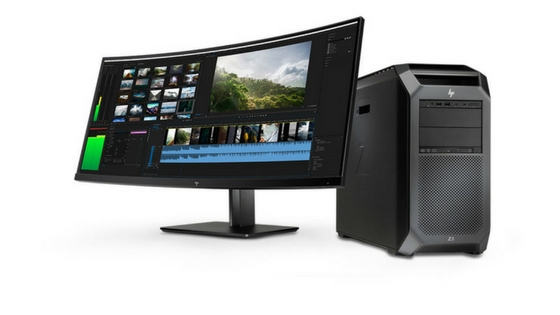
Hewlett-Packard has launched the fourth-generation of their Z-series workstations in three new variants. They are aimed at professionals who need more-and-more computing power in their day-to-day work, including people creating 360-degree video and Virtual Reality content.

HP Z4


HP Z4

It is the entry-level system among the three. It features a single Intel Xeon W chipset (you can choose from the eight available options), up to 256 GB DDR4 SDRAM, up to 4 TB storage, and eleven graphics options from AMD and Nvidia. The chassis comes with front and rear handles. HP Z4 will be available in November later this year at a starting price of $1,239.

HP Z6


HP Z6

It is the next-in-line and cozily sits between the Z4 and the Z8. It supports dual chipset, and you can choose from a wide range of Intel Xeon's family of Bronze, Silver, Gold and Platinum processors. Other features include up to 384 GB DDR4 SDRAM (twelve slots of 32 gigs each), up to 4 TB storage, and thirteen graphics options from AMD and Nvidia. Connectivity options include ten USB 3.1 (four in the front and six at the rear), two USB Type-C ports, Ethernet port, and serial ports for mouse and keyboard. Bluetooth and WiFi are also supported. HP Z6 will be available next month onwards at a starting price of $1,919.

HP Z8


HP Z8

At the top sits the Z8. One can choose the Operating System to buy along with - Windows 10 Pro for Workstations or Linux. It weighs a whopping 49.4 lb (22.4 kg). Dual CPUs are supported, and you can choose from a wide range of Intel Xeon family processors ranging from Bronze and going all the way up to Platinum. The highest variant (2.5 GHz Intel Xeon Platinum 8180) comes with 28 cores, thus making it 56 cores owing to the dual chipset support. All this processing power reportedly makes the Z8 capable of doing 8K video edits or running real-time 3D simulations. There is also a mechanism to cool the second CPU with fresh air than with recycled air from the first chipset's duct. Other features include up to 3 TB DDR4 SDRAM (twenty-four slots of 125 GB each), up to 4 TB of storage, and thirteen graphics options from AMD and Nvidia. Connectivity options include ten USB 3.1 ports, two USB Type-C ports, and an option to add Thunderbolt 3 as well. HP Z8 will be available next month onwards at a starting price of $2,439.

Watch the introductory video below:

Hasselblad, the high-end camera manufacturer, has today announced the Hasselblad X1D Field Kit. As the name suggests, it is nothing but a collection of tools and accessories professional photographers might need to get the most out of the X1D mirrorless camera.

Hasselblad X1D Field Kit

The kit consists of the X1D-50c camera itself, along with three XCD lenses (30 mm, 45 mm, and 90 mm), two batteries, shoulder and wrist strap, cleaning cloth, dust blower, lens pen, and a USB cable. A sturdy Pelican case sporting custom-cut foam inserts is used to keep all the stuff together.

Hasselblad X1D Field Kit comes in a rugged Pelican case

Regarding specifications, the X1D camera comes with a 50 MP CMOS sensor, 24-bit TFT touch display, GPS and WiFi sensors, and XGA electronic viewfinder.

The Hasselblad X1D Field Kit can be pre-ordered for $17,495. It will start shipping September 20 onwards.